The Meaning of Inclusion for Students with Special Needs at AIL UNAIR
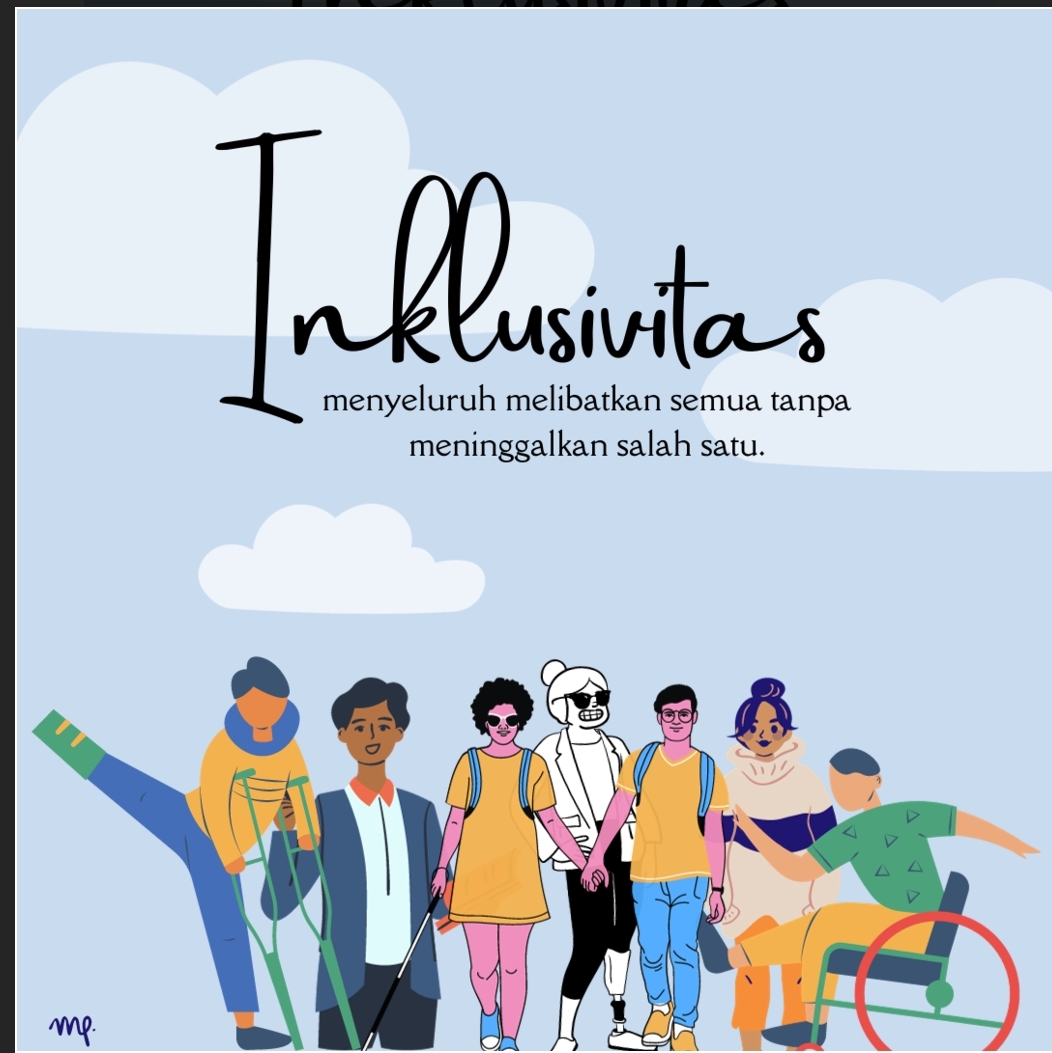
At yesterday's Airlangga Inclusive Learning (AIL) volunteer training, both volunteers and BEM representatives were invited to reflect on the meaning of inclusivity. In terms of language, inclusion comes from the English word “include,” which means to involve. From this meaning, it can be interpreted that inclusivity truly involves everyone from various groups without leaving anyone out. Being inclusive does not mean glorifying certain groups, such as marginalized groups, and then leaving non-marginalized groups behind.
Then who are these marginalized people?
Marginalized groups here are people who are different from most people and therefore vulnerable to discrimination, violence, and oppression, such as people with disabilities. The ideas of disability, defect, impairment, and “abnormality” are the result of social constructs involving various aspects of science, one of which is statistics. French statistician Adolphe Quetelet proposed the concept of the average human being based on comparisons of physical characteristics and flaws in the human body, such as weight, height, and body shape. This concept ultimately gave rise to “normality” and “abnormality” in society's mindset. In short, “normal” and “abnormal” depend on who is doing the defining. If people with disabilities are considered normal in this world, then those of us who consider ourselves ‘normal’ will be “abnormal” in the eyes of people with disabilities.
The use of words such as disability, abnormal, defective, or handicapped is considered irrelevant and can be viewed as insulting. Disability is often equated with inability, which means the inability and powerlessness to do something. In fact, they can do these things in ways that are different from other people. People with hearing impairments are not necessarily unable to speak or express their ideas. People who use wheelchairs can still do many things they want to do. Therefore, the term “disability” is now replaced with “differently abled,” which is an acronym for “differently abled,” meaning able to do things in a different way from others.
Ministry of Education Regulation No. 70 of 2009 stipulates that persons with disabilities have the right to equal access to education at all levels. At universities, particularly Airlangga University, persons with disabilities are classified as students with special needs (MBK) who require different teaching methods from other students depending on their specific needs.
“Education on all levels should be available, accessible, acceptable, and adaptable” (Committee on Economic, Social and Cultural Rights).
Each student with special needs has different educational requirements. Even if they share the same special needs, their educational requirements may differ. Diversity cannot be forced into uniformity. Therefore, AIL strives to provide a safe space and facilitate the needs of each student with special needs so that they can have equal access to education at Airlangga University. #mp.
Author: Primanita Nur
Editor: Rozi