The Philosophy behind the AIL UNAIR Logo
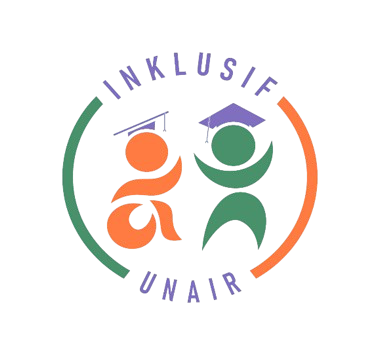
First, a person with disabilities who uses a wheelchair and wears this gown represents the entire community, including lecturers, students, and employees, especially students who are striving for the highest achievement, which is to complete their graduation. To his right is a person without disabilities who wears this gown, representing the entire Unair campus community, especially students who have also completed their graduation. This illustrates that persons with disabilities and the academic community will jointly advocate for issues and rights related to persons with disabilities within the scope of Airlangga University.
Second, they performed the TOS hand gesture to show mutual respect and friendship between the two people performing it, as well as to eliminate social barriers and gaps. This illustrates the spirit of people with disabilities and the academic community in spreading a message of friendship and equal treatment in building the vision and mission of Airlangga University.
The Philosophy and Meaning of Orange and Green:
The color orange represents brightness, happiness, optimism without despair, warmth, creativity, and confidence. This illustrates that people with disabilities have enthusiasm, are able to socialize, and have the spirit and joy that can improve academic achievement and lead to success in the learning process on campus.
Green represents nature, calmness, comfort, peace of mind, tranquility, and security. It describes the balance in carrying out campus activities and the surrounding environment comfortably and safely so that educational goals and targets are achieved.
The color purple represents wisdom, independence, courage, trust, loyalty, success, vision, and pride. This illustrates that Airlangga University is able to provide equal trust and opportunities to all members of the academic community, including people with disabilities, to carry out activities and learning processes on campus independently and successfully.
The circle symbolizes hope, kinship, sustainability, balance, and unity. It depicts people with disabilities and the academic community working together in the learning process with a sense of kinship and friendship in achieving common goals in a sustainable manner.